
Is Google Dorking Dead? What Changed for OSINT & Security

For over two decades, Google Dorking has been a staple technique for both ethical hackers and black hat hackers. By using advanced search operators, anyone could dig up hidden directories, exposed passwords, and unpatched website vulnerabilities directly from Google’s index.
However, the cybersecurity landscape has shifted dramatically. If you try to run classic vulnerability dorks today, you will quickly hit a wall of CAPTCHAs or empty search result pages.
Is Google Dorking completely dead? The short answer is: Yes, for automated vulnerability hunting, but absolutely not for OSINT (Open Source Intelligence).
Here is exactly what changed, why the classic methods failed, and how the technique has evolved.
Why Classic Google Dorking for Vulnerabilities is Dead
In the early days of the web, typing a query like inurl:wp-config.txt or filetype:sql "password" would yield a goldmine of exposed databases and configuration files. Today, using Google to discover exploitable websites is practically impossible.
1. Aggressive Anti-Bot Protections and CAPTCHAs
Google has deployed incredibly sensitive automated traffic detection. If you try to automate Google Dorking queries using scripts, or even if you manually enter several advanced search strings rapidly, you will be blocked instantly. The relentless barrage of Cloudflare-style turnstiles and Google CAPTCHAs makes bulk vulnerability scanning through the search engine non-viable.
2. Smart Filtering in Google Indexing
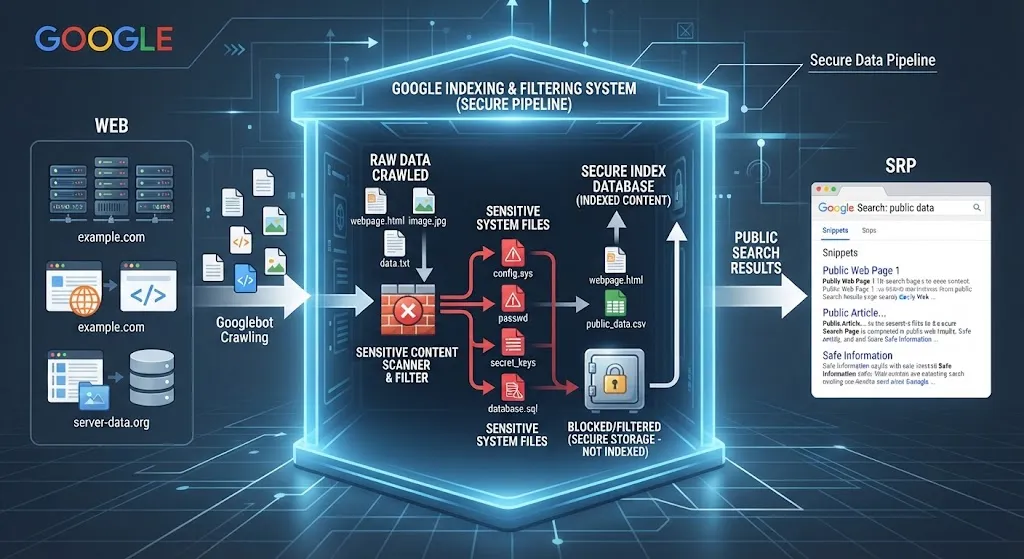
Google’s indexing algorithms have grown smarter. The search engine actively filters out results that contain obviously sensitive payload structures or patterns associated with web exploits. If a page looks like an exposed backend panel that shouldn’t be public, Google’s crawler often drops it from the public index entirely before an attacker can even query it.
3. The Lockdown of Google Images
Historically, hackers used Google Images to visually inspect exposed webcams, open directories, or unconfigured network dashboards using commands like intitle:"index of" "DCIM". Today, Google Images employs heavy query filtering and image-content analysis, making it useless for discovering systemic infrastructure flaws.
Where It Still Works, The Power of OSINT
While you can no longer use Google as a mass vulnerability scanner, Google Dorking remains an incredibly powerful tool for manual target profiling, digital footprint tracking, and OSINT.
When you shift your mindset from exploiting systems to gathering information about targets, advanced search operators work perfectly.
Investigating Brand Exposures
Organizations constantly leak information through third-party platforms or forgotten subdomains. You can use specific operators to audit an organization’s digital perimeter cleanly:
- Subdomain Discovery:
site:*.example.com -site:://example.comallows you to strip away the main website and find staging environments or forgotten legacy servers. - Exposed Cloud Buckets:
site:://amazonaws.com "companyname"helps locate cloud storage data that was mistakenly set to public.
Finding Leaked Documents
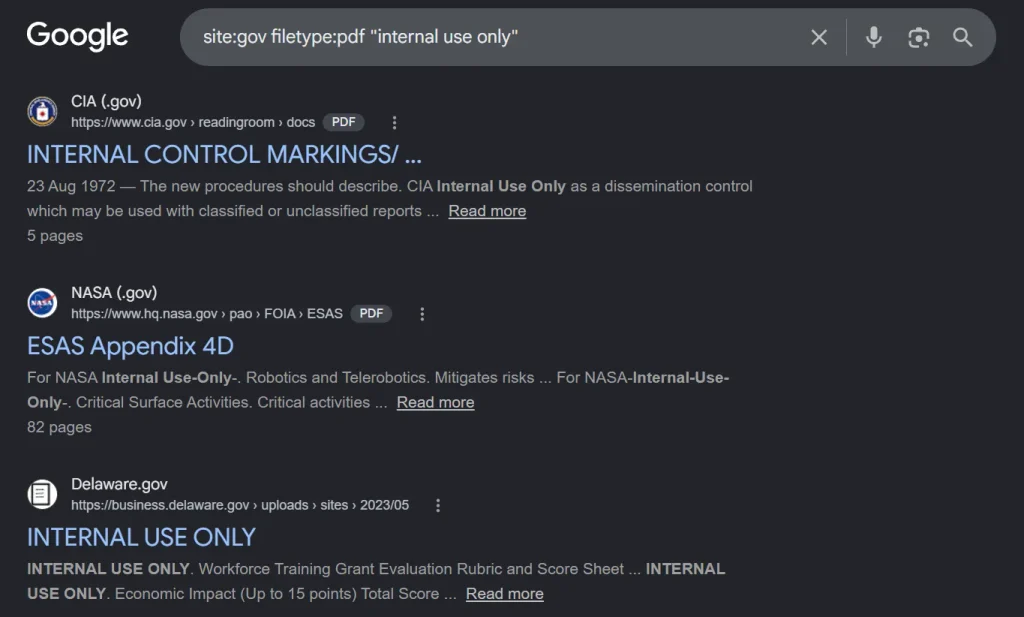
Employees frequently upload PDFs, spreadsheets, or presentations to public directories without realizing they contain internal notes.
site:example.com filetype:pdf "internal use only"site:example.com filetype:xlsx "salary" OR "budget"
These targeted, manual searches do not trigger Google’s aggressive anti-bot triggers because they represent genuine, human-like research behaviors.
Where Security Professionals Look Now
Because Google has locked down its platform, the cybersecurity industry has moved on to dedicated threat intelligence platforms. If you want to find internet-facing vulnerabilities today, you do not use Google—you use platforms built specifically to index the internet’s infrastructure.
| Platform Name | What It Indexes | Primary Use Case |
|---|---|---|
| Shodan | Open ports, banners, and device protocols | Finding unpatched servers, IoT devices, and open databases. |
| Censys | Attack surface details and certificates | Analyzing corporate network footprints and SSL/TLS exposures. |
| Criminal IP | Real-time IP address and domain threat intelligence | Identifying malicious inbound traffic and exposed open assets. |
These platforms do not care about web content keywords; they scan raw IP addresses and ports. They provide the deep technical insights that Google spent the last decade removing from its platform.
Conclusion, Adapt Your Methodology
Google Dorking isn’t extinct; it has simply evolved. The days of using Google as a free, automated point-and-click vulnerability scanner are gone. However, as an OSINT tool for human investigators, journalists, and security auditors looking for data leaks, it remains a vital skill. To stay ahead, secure your own external data exposures, move your vulnerability scanning to dedicated platforms, and use Google strictly for what it does best: uncovering public information.
FREQUENTLY ASKED QUESTIONS (FAQ)
Can I still get banned by Google for using search operators?
Yes. If you run complex operators like inurl:, intitle:, and filetype: repeatedly or too quickly, Google will flag your IP address as suspicious and require you to solve a CAPTCHA to continue.
What is the best alternative to Google Dorking for finding open databases?
The best alternatives are specialized search engines like Shodan, Censys, or ZoomEye. These platforms specifically crawl device ports and banners rather than standard web text.
How do companies prevent their sensitive files from showing up on Google?
Companies must configure their robots.txt file properly to instruct search engine bots not to index sensitive directories. Additionally, enforcing strong authentication on all internal staging sites prevents public crawlers from accessing the data.
Is Google Dorking illegal to use?
Using advanced search operators to find publicly indexed information on Google is entirely legal. However, using that gathered information to access systems without authorization or exploit vulnerabilities violates cybercrime laws globally.
Read more CVE , find out and visit my website (Nomatali). Thank you.