

What is SEO Cloaking? How Black Hat Hackers Rig Google

Have you ever clicked on a Google search result expecting a helpful tech blog, only to be redirected to an illegal gambling website? If so, you have experienced SEO cloaking firsthand. Black hat hackers and aggressive marketers frequently use this deceptive technique to bypass Google’s strict guidelines.
While Google continuously updates its algorithms to prioritize Experience, Expertise, Authoritativeness, and Trustworthiness (E-E-A-T), bad actors keep finding sophisticated loopholes. Cloaking is one of their most powerful weapons, especially for promoting restricted industries like online gambling (judi online or judol), high-risk financial schemes, and counterfeit products.
This article breaks down how cloaking works, why black hat hackers deploy it for gambling brands, and how search engines detect this algorithmic deception.
What is SEO Cloaking?
SEO cloaking is a black hat search engine optimization technique where the content presented to the search engine spider (crawler) is completely different from the content presented to the human user’s browser.
The primary goal of cloaking is to trick search engines into ranking a page for highly competitive or forbidden keywords. Search bots see a highly optimized, clean, and fully compliant website. Human visitors, however, are instantly delivered spammy, deceptive, or illegal content.
The Technical Mechanism Behind Cloaking
Cloaking relies on server-side scripts that identify who is requesting a webpage. When a visitor requests a page, the server analyzes specific data points to determine if the visitor is a human or a search engine bot:
- IP Address Check: Search engines publish or utilize specific IP address ranges for their crawlers (like Googlebot or Bingbot). The hacker’s server compares the incoming IP against a database of known search engine IPs.
- User-Agent String: Every browser and crawler sends a User-Agent string identifying itself. If the string contains “Googlebot”, the server serves the “clean” version of the website.
- JavaScript Execution: Deceptive setups may check if the visitor behaves like a human (e.g., mouse movements, screen resolution, or specific cookie handling) before serving the hidden page.
How Black Hat Hackers Use Cloaking for Online Gambling Brands
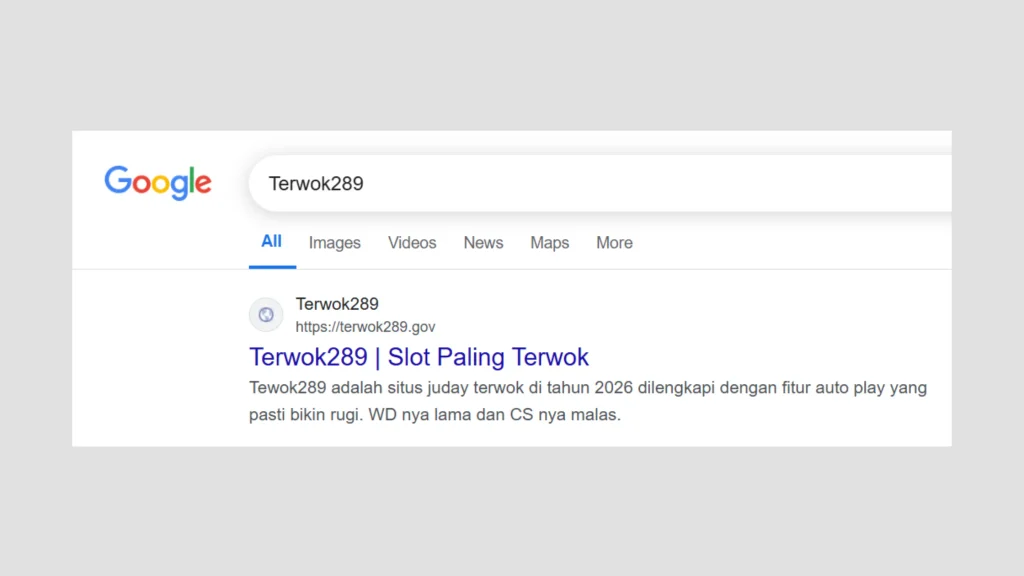
Promoting online gambling (judol) on mainstream search engines is incredibly difficult. Google strictly bans or heavily regulates gambling ads and organic search results depending on local jurisdictions. To bypass these walls, black hat hackers deploy cloaking in two primary ways.
[User or Search Bot Requests Page]
               │
               ▼
     [Server-Side Check]
               │
       ┌───────┴───────┐
       ▼               ▼
(Is Googlebot?)   (Is Human User?)
       │               │
       ▼               ▼
[Serves Safe,   [Redirects to Safe/
E-E-A-T Article]  Illegal Gambling Page]
1. Exploiting Government and Educational Sites (Parasite SEO)
Hackers rarely build cloaked sites from scratch. Instead, they breach high-authority domains, such as government websites (.gov or .go.id) and educational platforms (.edu or .ac.id).
Because these official sites already possess massive authority and trust in Google’s eyes, any new page published on them ranks almost instantly. The hacker inserts a hidden script on the breached page. Google’s crawler indexes an innocent article about public health or education. Meanwhile, a human user clicking the link from a search engine is immediately redirected to a gambling portal.
2. Bypassing Manual and Algorithmic Reviews
Google uses automated filters and human reviewers to spot spam. Cloaking ensures that whenever a human reviewer from Google or an automated compliance script audits the website, it looks perfectly legitimate. The actual gambling platform remains completely invisible to the regulators, allowing the illegal brand to siphon search traffic undiscovered for weeks or months.
Other Deceptive Uses of Cloaking
While online gambling is a massive driver for black hat SEO, cloaking is also used for several other illicit activities:
- Affiliate Link Masking: Rogue affiliates use cloaking to hide low-quality landing pages or forced affiliate cookie drops from networks and search engines.
- Malware Distribution: Hackers cloak malicious download pages. Googlebot downloads a safe PDF file, while human users download ransomware or spyware.
- Phishing Campaigns: Cybercriminals present a harmless informational site to security scanners but show a fake banking login screen to target victims.
Why Cloaking is a Fatal Strategy for Legitimate Businesses
If cloaking drives fast traffic, why shouldn’t legitimate businesses use it? The answer is simple: Google penalizes cloaking with absolute severity.
Google’s webmaster guidelines explicitly categorize cloaking as a direct violation of their quality policies. When Google detects cloaking—either through advanced algorithmic pattern recognition, user spam reports, or periodic crawler IP updates—the consequences are permanent:
- De-indexing: The entire domain is wiped from Google’s search index. It will no longer appear for any search query.
- Loss of Brand Trust: If your site is hacked and used for gambling cloaking, your hard-earned domain authority drops to zero, and browsers may flag your site with a “Dangerous Site” warning.
Frequently Asked Questions (FAQ)
What is the main difference between cloaking and white hat redirection?
White hat redirection (like a 301 redirect) sends both the search engine bot and the human user to the exact same final URL. Cloaking explicitly splits the audience, showing a clean page to the bot and a completely different, often restricted page to the human user.
Is IP delivery considered cloaking?
Not always. Legitimate IP delivery changes language or currency based on a user’s location (geotargeting). It only becomes cloaking if you intentionally alter the core content of the page specifically to deceive search crawlers about what the page actually contains.
How does Google detect advanced cloaking setups?
Google uses deep learning algorithms, anonymous user behavior tracking, and “secret shopper” crawlers that mask their IP addresses to look like normal human browsers. When the content delivered to the secret crawler doesn’t match the standard Googlebot index, a penalty is triggered.
My website was hacked with gambling cloaking. How do I fix it?
First, scan your server files for unfamiliar PHP or JavaScript scripts, especially in your .htaccess file. Clean your database, update all access credentials, and use security tools to verify that your site serves identical content to both Googlebot and normal users. Once fixed, submit a reconsideration request through Google Search Console.
More articles read on our website. Thank you so much.